Autumn continues, and new symptoms come along with it. It is in the fall that there is a high probability of getting the flu. Thousands of rumors and myths are circulating about this disease, but let’s figure out what the flu is, what are its symptoms, what can and cannot be done during the course of the disease and how to treat it.
Influenza – an acute infectious disease of the respiratory tract, which is caused by the penetration of a pathogenic virus into the body. There are four kinds of influenza viruses that are related to the type of orthomyxoviruses. Often the flu causes epidemics. In most cases, the disease goes away on its own, but without proper treatment, it can cause serious complications and even death in people with chronic diseases or who are at risk.
How flu spreads
All categories of people are sensitive to flu. Distribution occurs by infection from the sick to a healthy person. The patient may not yet have symptoms, but he will already be the carrier of the disease. The flu virus is released by sneezing or coughing. Infection occurs by inhalation of an aerosol particle with a virus.

Epidemics and pandemics occur due to lightning infection, when the patient is in a place of large crowds. There are 4 influenza serotypes: A, B, C, and D. Epidemics most often cause serotype A and serotype B. Serotype C occurs in outbreaks, and only animals are affected by serotype D.
When flu season
Influenza occurs in the autumn-winter period. The probability of illness is especially high at a temperature range from +5 to -5 ° C, when air humidity is significantly reduced. In this case, the airways are cooled, drier air is a favorable condition for the penetration of the virus.
Residents of America vaccinate against influenza every year, but flashes can still occur. Why is this happening? The thing is that the influenza virus has the ability to change its structure depending on external conditions. So-called flu strains are formed that show resistance to the vaccine.
Flu systems
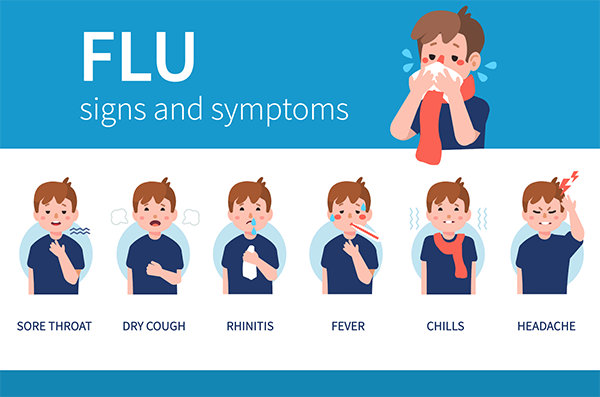
Symptoms of influenza can occur 3-24 hours after infection with the virus. The difficulty in making the diagnosis is that the flu is similar to many other acute respiratory viral infections. The main indicator of influenza is a sharp increase in body temperature, sometimes without accompanying symptoms. The temperature can reach 40 ͦС, while ARVI usually does not give a temperature of more than 38.5 ͦС.
The next symptom of flu can be frequent and intense headaches and muscle pain. With flu, there may not be a runny nose at all, while with SARS it is pronounced. Also, with cough, flu manifests with severe pain in the chest area.
Flu: how long the symptoms last
On average, flu symptoms persist for about 7 days. But if the immune system is too weakened or other chronic diseases are present, the course of the disease can last up to 12-14 days. If you ignore the treatment, it can take up to 21 days to fully recover, and the likelihood of complications is also high.
The risk group includes people over 65 years old, children under 5 years old, people with chronic diseases and immunodeficiency.
What worsens flu
Complications can arise as a result of the features of the course of the disease, namely:
• the virus suppresses the body’s immunity;
• destroys tissue barriers;
• has a capillarotoxic effect.
What complications can the flu cause:
1. Bacterial, hemorrhagic pneumonia
2. Lung abscess
3. Acute respiratory distress syndrome
4. Lung empyema
5. Rhinitis, sinusitis, otitis media, tracheitis
6. Neuritis, meningitis, viral encephalitis, myocarditis
7. Toxic-allergic shock
8. Very rarely Reye’s syndrome.
Symptoms of flu complications: rib cough pain, temperature jumps, shortness of breath, shortness of breath, unconsciousness, cramps, temperature stability when taking antipyretic drugs.
“Can i breastfeed if i have flu”
Often in women who breastfeed their babies, the question arises as to whether breastfeeding can continue. The question arises not only because of fear of transmitting the virus itself, but also because of fear while taking antiviral drugs.
Medical experts say that you can feed your child during the flu. The mother’s body produces antibodies that fight the virus. These antibodies come with breast milk, which means the baby gets protection. But despite this, it is necessary to strictly observe the rules of hygiene and protection so that the baby does not receive your microbes from the outside.
What to do:
• Wear a mask, periodically change it to a new one
• Wash hands frequently
• Express breast milk and ask healthy family members to feed the baby
The first thing to do is consult with your healthcare provider, if only because:
• The child may have an allergic reaction to the components of the drug;
• The taste of milk may change and the baby refuses to breast milk.
If you do not know which drugs are prohibited during breastfeeding, you can contact our pharmacists. You can be sure that the composition of our mexico pharmacy drugs is not different from the composition of the drugs in your pharmacy. You can select an antiviral drug in the Anti Viral section.
Flu vaccination. Prevention
One of the main ways to prevent influenza is vaccination, which medical experts recommend make annually. The vaccine does not 100% protect against influenza infection, but significantly reduces the risk of complications and, as a result, deaths. Vaccination is especially recommended for people in risk groups:
• older people over 65
• pregnant women
• children aged 6 months to 5 years
• people with chronic diseases and immunocompromised.
Vaccination showed a significant reduction in the incidence in only 1 group – in children aged 6 months – 7 years.

How to carry out prophylaxis indoors with influenza infection
If the patient is in the room, it is necessary to periodically carry out prophylaxis, which consists in:
1. Wet cleaning using disinfectants with virucidal action
2. Processing the premises using UV equipment.
Natural treatment for flu
Natural remedies are not effective in combating the influenza virus, but contribute to strengthening the body’s immunity. If you or your loved ones are at increased risk, then natural remedies will also not reduce the likelihood of complications, in this case it is better to take antiviral drugs or interferon, but more on that later.
If the flu virus has already taken over your body, here are some guidelines for a relative natural cure for the flu:
1. Give the body a break. Your body directs all energy to fight the virus, which is why you can feel a breakdown and weakness.
2. Drink water. Water helps cool the body, replenish water balance during dehydration, quickly remove mucus and germs, moisturize the nasopharynx. Useful flu flu:
• Water
• Coconut water
• Herbal tea
• Freshly squeezed vegetable or fruit juices
• Bouillon
3. Eat foods that are good for the body during illness: bananas, rice, bell peppers, blueberries, carrots, chili peppers (only if there are no concomitant gastrointestinal diseases), cranberries, green tea.
Which medicine cures flu. Flu what can i take
In our pharmacy you can buy medicines in Mexico with delivery to your address. What drugs are recommended for the prevention and treatment of influenza:
1. Antifludes – a combined antiviral drug that contains 3 active ingredients: Paracetamol 84.9% / Amantadina 14.16% / Clorfenamina 0.85%. It is used for the prevention and treatment of influenza A.
2. Isoprinosine – an immunostimulating agent that does not affect the influenza virus, but is used to increase the body’s defenses.
You can order mexico pharmacy drugs in a way convenient for you. If you need prescription drugs, please leave a request through our online form. The request will be checked by our specialists within 24 hours. Maintain health and well-being at any time of the year. With best regards, your Medicines Mexico pharmacy.